Solar installer · Hawaii
Hawaii solar installer license requirements
What Hawaii requires before you take paid solar installation: the license, job size limit, exams, fees, bond and insurance. Checked November 6, 2026 from 17 official sources.
Do I need a license to work as a solar installer in Hawaii?
Yes. You need a state license: C-60 Solar Power Systems Contractor.
Issued by Contractors License Board (DCCA Professional and Vocational Licensing)12
- Needed from
- $1,500
- Bond
- None listed
- Application fee
- $50
- Exams
- 2
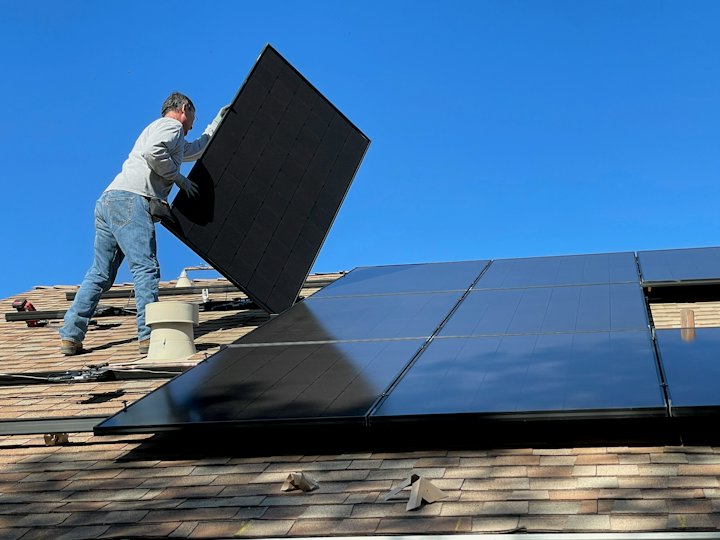
A contractor license is needed for any project where labor and materials together cost more than $1,500, and for any project that needs a building, electrical or plumbing permit, whatever the cost.23456
More
Without a license, a handyman may take only jobs of $1,500 or less that need no permit. This exemption does not cover electrical or plumbing work. A license is also needed to bid on or offer work that needs a license. The board's older FAQ, dated 2018, gave the limit as $1,000; the 2026 DCCA consumer handouts give $1,500.
How to get licensed
- 1
- 2
File the application for the C-60 classification with the $50 fee, at least three notarized experience certificates, the project list, a CPA-prepared financial statement, a credit report covering five years, and a Hawaii tax clearance.7814
More
A company files its own application and its RME files a separate one; both pay fees.
- 3
- 4
- 5
- 6
What Hawaii requires
Experience
The sole proprietor, or the responsible managing employee (RME) who qualifies a company, needs at least four years of supervisory experience as a foreman, supervising employee or contractor in the classification applied for, within the ten years before applying.678
More
The board may accept self-employed or unlicensed experience, and may count technical or business training as no more than one year. Applicants send at least three notarized experience certificates and a Chronological History of Projects form for each classification. Hawaii has no reciprocity with other states.
Exams 2
- Part I - Business and Law
- Part II - Trade (C-60)
A written exam on knowledge of the C-60 classification, taken through PSI after the board approves the application.7910
More
Both parts must be passed within six months of approval, or the applicant must file a new application. No exam is needed if the person passed the exam for the same classification within the past four years. The exam fee is paid to PSI; the state fee rule says it is set by agreement with the testing service.
Bond None
Hawaii does not set one standard license bond. The board may require a surety bond, in an amount it decides, as proof of financial integrity before it issues a license.671011
More
A licensee must keep a board-imposed bond for at least one year before asking to waive it. A waiver request costs $25 and needs a current financial statement compiled, reviewed or audited by a licensed CPA. On home jobs, the contractor must tell the homeowner whether it is bonded.
Liability insurance
Before the license is issued, the applicant sends a certificate of liability insurance with at least $100,000 bodily injury per person, $300,000 bodily injury per occurrence, and $50,000 property damage per occurrence.78
More
Coverage must be kept without a break. A lapse forfeits the license automatically, and if coverage is not restored within 60 days the holder must apply again as a new applicant.
Workers' compensation
The applicant sends a workers' compensation certificate from an insurer authorized in Hawaii.7812
More
A contractor can file the board's exclusion form instead if it is: a sole owner with no employees; a partnership with no employees (not an LLP); an RME who owns at least 50% of the corporation, LLC or LLP and has no other employees; an RME who owns at least 25% of the stock, is an officer, takes no wages and has no other employees; or an out-of-state contractor with no employees in Hawaii. Hiring anyone in Hawaii ends the exclusion.
Renewal
Every contractor license expires on September 30 of each even-numbered year, whatever its issue date.1713
More
The current period runs October 1, 2026 to September 30, 2028. Entities and sole proprietors must have a Hawaii tax clearance issued within six months, in the exact license name, plus current liability and workers' compensation coverage and any board-imposed bond. A license not renewed by September 30 is forfeited, and the holder may not work. It can be restored within 60 days (by November 30) with a late fee; after that the holder must apply as a new applicant. The renewal conditions in the board's rules do not include continuing education.
Fees
Good to know
Licensed contractors pay into the Contractors Recovery Fund ($150 at licensing and $10 at each renewal under the rules).71017
More
It can pay homeowners hurt by a licensed contractor's violation, up to $12,500 per contract and $25,000 per contractor, after a court judgment. It does not cover work by unlicensed people.
For home construction or improvement, the contractor must give the homeowner a written contract before work starts.7
More
It must list the license number and classifications, the price, start date and length, scope and materials, subcontractors, lien rights and any warranty. Ads must show the licensed name and license number.
Hiring a solar installer in Hawaii?
What to ask for
A current C-60 Solar Power Systems Contractor number, then look it up yourself.
Common questions
Do I need a license to work as a solar installer in Hawaii?
Yes. Hawaii requires C-60 Solar Power Systems Contractor. A contractor license is needed for any project where labor and materials together cost more than $1,500, and for any project that needs a building, electrical or plumbing permit, whatever the cost. Without a license, a handyman may take only jobs of $1,500 or less that need no permit. This exemption does not cover electrical or plumbing work. A license is also needed to bid on or offer work that needs a license. The board's older FAQ, dated 2018, gave the limit as $1,000; the 2026 DCCA consumer handouts give $1,500.
How much does C-60 Solar Power Systems Contractor cost in Hawaii?
Application fee (per application, one or more classifications): $50. Education fund fee, paid with the application: $10. Original license fee, contracting entity or sole proprietor, licensed in the first year of the two-year period (includes half the renewal fee): $355. Original license fee, contracting entity or sole proprietor, licensed in the second year of the two-year period: $260. Original license fee, responsible managing employee (RME), second year of the two-year period; $290 in the first year: $260. Contractors recovery fund fee at licensing, contracting entity: $150. On-time renewal every two years, entity or sole proprietor, active (2026 renewal): $338. On-time renewal every two years, RME, active (2026 renewal): $208. On-time renewal, any contractor license, inactive (2026 renewal): $160. Late renewal (restoration), entity or sole proprietor, active: $388. Bond waiver or entity conversion application: $25.
Is a bond required?
Hawaii does not set one standard license bond. The board may require a surety bond, in an amount it decides, as proof of financial integrity before it issues a license. A licensee must keep a board-imposed bond for at least one year before asking to waive it. A waiver request costs $25 and needs a current financial statement compiled, reviewed or audited by a licensed CPA. On home jobs, the contractor must tell the homeowner whether it is bonded.
What exams do I need to pass?
Part I - Business and Law. Part II - Trade (C-60).
How often do I renew?
Every contractor license expires on September 30 of each even-numbered year, whatever its issue date. The current period runs October 1, 2026 to September 30, 2028. Entities and sole proprietors must have a Hawaii tax clearance issued within six months, in the exact license name, plus current liability and workers' compensation coverage and any board-imposed bond. A license not renewed by September 30 is forfeited, and the holder may not work. It can be restored within 60 days (by November 30) with a late fee; after that the holder must apply as a new applicant. The renewal conditions in the board's rules do not include continuing education.
Sources
17 official pages, checked November 6, 2026
- Contractors License Board - DCCA Hawaii · Hawaii Department of Commerce and Consumer Affairs, Professional and Vocational Licensing Division · checked November 6, 2026
- Hire a Licensed Contractor - DCCA Hawaii · Hawaii Department of Commerce and Consumer Affairs · checked November 6, 2026
- Hire a Licensed Contractor Because... (rev. 260123) · Hawaii DCCA Regulated Industries Complaints Office · checked November 6, 2026
- Top 10 Tips for Construction Projects (rev. 260123) · Hawaii DCCA Regulated Industries Complaints Office · checked November 6, 2026
- Risks and Responsibilities of Being an Owner-Builder (rev. 260116) · Hawaii DCCA Regulated Industries Complaints Office · checked November 6, 2026
- Contractor Frequently Asked Questions (dated 7/9/18) · Hawaii DCCA Contractors License Board · checked November 6, 2026
- Hawaii Administrative Rules, Title 16, Chapter 77, Contractors · Hawaii Department of Commerce and Consumer Affairs · checked November 6, 2026
- Requirements for License - Contractor, Sole Proprietor (form CT-00(B) 1025) · Hawaii DCCA Contractors License Board · checked November 6, 2026
- Contractors License Board Examination - DCCA Hawaii · Hawaii DCCA Contractors License Board · checked November 6, 2026
- Hawaii Administrative Rules, Chapter 16-53, Fees Relating to Boards and Commissions · Hawaii Department of Commerce and Consumer Affairs · checked November 6, 2026
- Requirements for Reactivation/Status Change, Bond Waiver/Conversion - Contractors · Hawaii DCCA Contractors License Board · checked November 6, 2026
- Exclusion from Chapter 386, HRS (form CT-13) · Hawaii DCCA Contractors License Board · checked November 6, 2026
- Contractor Firm and Sole Proprietor Renewal Requirements - DCCA Hawaii · Hawaii DCCA Contractors License Board · checked November 6, 2026
- Requirements for License - Contractor, Entity (form CT-01 1025) · Hawaii DCCA Contractors License Board · checked November 6, 2026
- Contractors License Board Application Forms and Publications - DCCA Hawaii · Hawaii DCCA Contractors License Board · checked November 6, 2026
- Description of Contractor License Classifications · Hawaii DCCA Contractors License Board · checked November 6, 2026
- Information for Consumers About Hawaii's Contractors Recovery Fund (rev. 260123) · Hawaii DCCA Contractors License Board · checked November 6, 2026
Rules change. Confirm with the agency before you bid or start work. How we research
Other trades in Hawaii
 General contractor
B General Building Contractor
 Residential builder
B General Building Contractor
 Electrician
C-13 Electrical Contractor
 Plumber
C-37 Plumbing Contractor
 HVAC contractor
C-52 Ventilating and Air Conditioning Contractor
 Roofer
C-42 Roofing Contractor
 Painter
C-33 Painting and Decorating Contractor
 Handyman
Covered by the state contractor license above a threshold
 Landscaper
C-27 Landscaping Contractor
 Flooring contractor
C-21 Flooring Contractor
 Concrete contractor
C-31a Cement Concrete Contractor
 Demolition contractor
C-24 Building Moving and Wrecking Contractor
 Pool and spa contractor
C-49 Swimming Pool Contractor
 Fence contractor
C-32 Ornamental, Guardrail, and Fencing Contractor or C-32a Wood and Vinyl Fencing Contractor
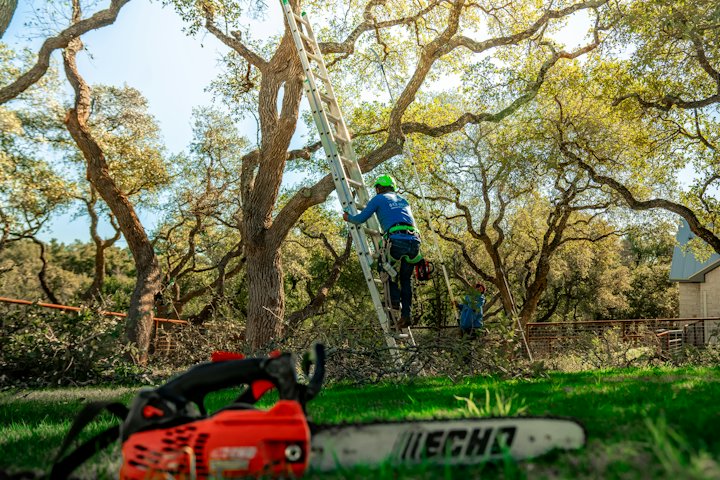 Tree service
C-27b Tree Trimming and Removal Contractor
 Pest control
Pest Control Operator (Branch 1 Fumigation, Branch 2 General Pest, Branch 3 Termite)
Solar installer licenses in other states
 Alabama
Home builders license without limitation (unlimited), for residential solar
 Arkansas
Home Improvement license with the Solar Systems specialty (residential, over $2,000); commercial license with the Solar Systems specialty (commercial, $50,000 or more)
 California
C-46 Solar Contractor
 Colorado
Photovoltaic Installer registration (or Electrical Contractor registration)
 Connecticut
PV-1 Limited Solar Electric Contractor (PV-2 Journeyperson); ST-1 Solar Thermal Contractor
 Florida
Certified Solar Contractor (CV) or Registered Solar Contractor (RV)
 Idaho
Limited electrical installer and limited electrical contractor (Solar Photovoltaic category)
 Illinois
Distributed Generation Installer Certification
 Louisiana
Solar Energy Equipment specialty (LSLBC)
 Maryland
Covered by the state contractor license above a threshold
 Massachusetts
Electrician license (for the electrical work), plus Construction Supervisor License and HIC registration
 Michigan
Electrical Contractor License
 Minnesota
Residential Building Contractor (BC) or Residential Remodeler (CR) license, plus an electrical contractor license for the installation
 Mississippi
Residential Solar license; Solar and Wind Construction classification (commercial)
 Nevada
C-2g Photovoltaics (electric); C-37 Solar Contracting (solar heating)
 New Jersey
Electrical Contractor License and Business Permit
 New Mexico
EE-98 or ER-1 Electrical (photovoltaic); MM-1 or MM-98 (solar thermal piping)
 New York
No state license. Cities or counties may license it
 North Carolina
Covered by the state contractor license above a threshold
 North Dakota
Covered by the state contractor license above a threshold
 Oregon
Limited Renewable Energy Contractor (CLR) or Electrical Contractor (C) license, with Limited Renewable Energy Technician (LRT) or journeyman electricians
 Pennsylvania
Home Improvement Contractor Registration (HICPA)
 Rhode Island
Renewable Energy Professional Certificate (Certificate REP), with electrical work by a licensed electrician
 South Carolina
Residential Specialty Contractor registration, Solar Panel Installers classification (Residential Builders Commission); General Contractor license, Miscellaneous Metals subclassification (Contractor's Licensing Board)
 Tennessee
Contractor license with S-Solar Panel Installation specialty classification
 Texas
Electrical Contractor (TDLR) to install; Residential Solar Retailer registration (TDLR) to sell or lease residential systems
 Utah
S202 Solar Photovoltaic Contractor
 Virginia
Class A, B or C contractor license with the Alternative Energy System (AES) specialty
 Washington
Electrical contractor license, with certified electricians
 West Virginia
Electrical Contractor license (Contractor Licensing Board) and a State Fire Marshal electrician license