Pest control · Missouri
Missouri pest control license requirements
What Missouri requires before you take paid pest control work: the license, job size limit, exams, fees, bond and insurance. Checked November 6, 2026 from 8 official sources.
Do I need a license to work as a pest control in Missouri?
Yes. You need a state license: Certified Commercial Applicator License (Category 7A General Structural, 7B Termite, 7C Fumigation).
Issued by Missouri Department of Agriculture, Bureau of Pesticide Control3
- Needed from
- See limit below
- Bond
- $50,000
- Certified commercial applicator license, per year
- $65
- Exams
- 2
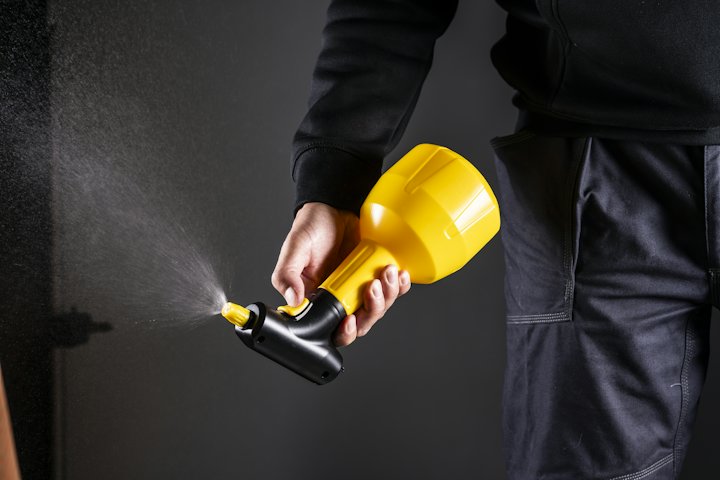
Anyone in the business of using any pesticide, or deciding when it is needed, on the land of another needs a certified commercial applicator license in the right category.345
More
This covers general use and restricted use pesticides. Employees who apply general use pesticides under a certified applicator's direct supervision in structural or termite pest control need a pesticide technician license.
How to get licensed
- 1
- 2
Pass the CORE exam and the category exam (7A, 7B or 7C) at Pearson VUE.3
- 3
- 4
What Missouri requires
Experience
Applicants for Category 7A, 7B or 7C must show valid experience using pesticides in that category, or an associate's degree or equivalent in biology, chemistry, agriculture or entomology.36
More
The state's form asks for months of experience gained in the last three years. The page does not state a minimum number of months.
Bond $50,000
Before the license is issued, the applicant or employer must show financial responsibility of at least $50,000 per occurrence, by a surety bond or a liability insurance policy.38
More
It does not need to cover damage to crops, plants or land being treated. The insurer must notify the department before cancelling or reducing it. A deductible of up to $1,000 may be accepted.
You pay a yearly premium, not the full amount: about $500–$1,500 a year with good credit (about 675-700+). Estimate for your credit
Workers' compensation
Not published by the agency for this license.
Renewal
The commercial applicator license expires every year and is renewed with the $65 fee.37
More
A 60-day grace period applies, with a 25% late penalty. Certification must be renewed every three years by approved recertification training or re-examination. Since January 1, 2025, recertification must cover CORE and every category on the license. Technicians must retrain every three years.
Fees
Good to know
The certified applicator or employer must keep pesticide application records for three years and display the license at the business location.4
If a business loses its only certified applicator, it may keep operating for up to 60 days without restricted use pesticides and must tell the department right away.4
Ornamental and Turf Pest Control is a separate category (Category 3), with its own technician training program (MDA-3).3
Pest control rules in Missouri cities
Some places make pest controls get a local license on top of Missouri's. Find yours below.
- ArnoldNo local license for this trade
- BallwinNo local license for this trade
- BeltonNo local license for this trade
- ColumbiaContractor registration; trades not listed
- Des PeresNo local license for this trade
- EllisvilleNo local license for this trade
- Excelsior SpringsNo local license for this trade
- GladstoneNo local license for this trade
- HarrisonvilleNo local license for this trade
- IndependenceNo local license for this trade
- KearneyNo local license for this trade
- Lake Saint LouisNo local license for this trade
- Lee's SummitNo local license for this trade
- LibertyNo local license for this trade
- Oak GroveNo local license for this trade
- ParkvilleNo local license for this trade
- RaymoreNo local license for this trade
- RaytownNo local license for this trade
- Richmond HeightsContractor registration; trades not listed
- SmithvilleNo local license for this trade
- SpringfieldNo local license for this trade
- St. CharlesNo local license for this trade
- St. JosephNo local license for this trade
- St. LouisContractor registration; trades not listed
- University CityNo local license for this trade
- Webster GrovesNo local license for this trade
- WentzvilleNo local license for this trade
No match. Your city may not be on the site yet. Check with its building department.
Hiring a pest control in Missouri?
What to ask for
A current Certified Commercial Applicator License (Category 7A General Structural, 7B Termite, 7C Fumigation) number, then look it up yourself. Missouri also requires a bond for this license.
Common questions
Do I need a license to work as a pest control in Missouri?
Yes. Missouri requires Certified Commercial Applicator License (Category 7A General Structural, 7B Termite, 7C Fumigation). Anyone in the business of using any pesticide, or deciding when it is needed, on the land of another needs a certified commercial applicator license in the right category. This covers general use and restricted use pesticides. Employees who apply general use pesticides under a certified applicator's direct supervision in structural or termite pest control need a pesticide technician license.
How much does Certified Commercial Applicator License (Category 7A General Structural, 7B Termite, 7C Fumigation) cost in Missouri?
Certified commercial applicator license, per year: $65. Pesticide technician license, per year: $35. Noncertified restricted use pesticide (NRUP) applicator license, per year: $35.
Is a bond required?
Before the license is issued, the applicant or employer must show financial responsibility of at least $50,000 per occurrence, by a surety bond or a liability insurance policy. It does not need to cover damage to crops, plants or land being treated. The insurer must notify the department before cancelling or reducing it. A deductible of up to $1,000 may be accepted.
What exams do I need to pass?
General Standards of Competence (CORE). Category exam (such as 7A, 7B or 7C).
How often do I renew?
The commercial applicator license expires every year and is renewed with the $65 fee. A 60-day grace period applies, with a 25% late penalty. Certification must be renewed every three years by approved recertification training or re-examination. Since January 1, 2025, recertification must cover CORE and every category on the license. Technicians must retrain every three years.
Sources
8 official pages, checked November 6, 2026
- Office of Statewide Electrical Contractors · Missouri Division of Professional Registration · checked November 6, 2026
- Listings of Boards · Missouri Division of Professional Registration · checked November 6, 2026
- Pesticide Control · Missouri Department of Agriculture · checked November 6, 2026
- Revised Statutes of Missouri, RSMo Section 281.035: Certified commercial applicator's license required · Missouri Revisor of Statutes · checked November 6, 2026
- Revised Statutes of Missouri, RSMo Section 281.038: Pesticide technician's license · Missouri Revisor of Statutes · checked November 6, 2026
- Verification of Structural Pesticide Applicator Experience (MO 350-1615) · Missouri Department of Agriculture · checked November 6, 2026
- Significant changes to the Missouri Pesticide Use Act (MPUA) effective Jan. 1, 2025 · Missouri Department of Agriculture · checked November 6, 2026
- Property Damage and Bodily Injury - Certificate of Liability Insurance (MO 350-0577) · Missouri Department of Agriculture · checked November 6, 2026
Rules change. Confirm with the agency before you bid or start work. How we research
Other trades in Missouri
 General contractor
No state license. Cities or counties may license it
 Residential builder
No state license. Cities or counties may license it
 Electrician
Statewide Electrical Contractor License (optional)
 Plumber
No state license. Cities or counties may license it
 Painter
No state license. Cities or counties may license it
 Concrete contractor
No state license. Cities or counties may license it
 Demolition contractor
No state license for this work
 Junk removal and hauling
No state license for this work
Pest control licenses in other states
 Alabama
Structural Professional Services permit (HPC, FC, WDC categories) with a certified operator
 Arizona
Pest management business license, with a registered qualifying party who is a certified qualified applicator
 Arkansas
Pest control commercial license (license holder and licensed operator), Arkansas Department of Agriculture
 Colorado
Commercial Applicator business license, with a licensed Qualified Supervisor
 Connecticut
Commercial Pesticide Supervisory Certification (such as 7A General Pest Control) and Pesticide Application Business Registration
 Delaware
Pesticide Business License and Certified Commercial Applicator (Delaware Department of Agriculture)
 District of Columbia
Pesticide Operator License and Certified Pesticide Applicator License
 Florida
Pest Control Business License, with a Certified Pest Control Operator in charge
 Georgia
Structural Pest Control Company License, with a Designated Certified Operator for each category
 Hawaii
Pest Control Operator (Branch 1 Fumigation, Branch 2 General Pest, Branch 3 Termite)
 Idaho
Professional pesticide applicator license
 Illinois
Commercial Structural Pest Control Business License and Certified Technician
 Indiana
Pesticide Business License and Commercial Applicator License (for hire)
 Iowa
Commercial pesticide applicator license (company) and commercial applicator certification in Category 7, Industrial, Institutional, and Structural Pest Control
 Kansas
Pesticide Business License (with a Certified Commercial Applicator)
 Kentucky
Commercial Structural Pest Management Operator license, Applicator license, and Structural Pest Management Company registration
 Louisiana
Structural Pest Control Operator license (by phase) and Place of Business Permit
 Maine
Commercial Applicator Certification; Spray Contracting Firm License
 Maryland
Pesticide Business License and Pest Control Applicator Certificate
 Massachusetts
Pesticide Applicator License (core) and Commercial Applicator Certification
 Michigan
Commercial Applicator Certification and Commercial Applicator License
 Minnesota
Structural Pest Control Applicator license (Journeyman or Master) and Structural Pest Control Company license
 Mississippi
Professional Services Company License and Operator License (Bureau of Plant Industry)
 Montana
Commercial Pesticide Applicator license
 Nebraska
Commercial Pesticide Applicator license (Category 08 Structural and Health-Related Pest Control; 08W Wood Destroying Organisms)
 Nevada
Pest control business license, plus an individual license as principal, operator or agent
 New Hampshire
Commercial Applicator Certificate of Registration (Category F, industrial, institutional, structural and health related pest control)
 New Jersey
Pesticide Applicator Business License and Commercial Pesticide Applicator certification
 New Mexico
Commercial Applicator license (with category certification, such as 7A structural pests or 7D wood-destroying pests)
 New York
Pesticide business registration and commercial pesticide applicator or technician certification
 North Carolina
Structural Pest Control License (P, W or F phase)
 North Dakota
Commercial Applicator Certification
 Ohio
Commercial Pesticide Applicator License (category 10a General Pest, 10b Termite, and others) and Pesticide Business License
 Oklahoma
Commercial Pesticide Applicator License (with a certified applicator)
 Oregon
Commercial Pesticide Operator license (business), with Commercial Pesticide Applicator licenses for individuals
 Pennsylvania
Pesticide application business license and commercial pesticide applicator certification
 Rhode Island
Commercial Pesticide Applicator License or Certification (such as Category 7A General Pest)
 South Carolina
Commercial Pesticide Applicator license, Category 7A, and Pest Control Business License
 South Dakota
Commercial Pesticide Applicator License
 Tennessee
Pest control charter (business) and pest control operator license by category, such as General Pest and Rodent Control (GRC) or Wood Destroying Organisms (WDO)
 Texas
Structural Pest Control Business License, with a Commercial Certified Applicator as Responsible Certified Applicator
 Utah
Commercial Pesticide Business License (4000), plus a Commercial Pesticide Applicator License (4001) for each applicator
 Virginia
Commercial Pesticide Applicator certification (Category 7A-7E) and Pesticide Business License
 Washington
Commercial Applicator pesticide license (company and individual), with Commercial Operator licenses for employees
 West Virginia
Licensed Pesticide Application Business (LPAB) license, Commercial Applicator license and Registered Technician license
 Wisconsin
Commercial applicator certification, Individual Commercial Applicator License (ICAL), and Pesticide Business License (PBL)
 Wyoming
Commercial Pesticide Applicator License