Pool and spa contractor · North Carolina
North Carolina pool and spa contractor license requirements
What North Carolina requires before you take paid pool and spa work: the license, job size limit, exams, fees, bond and insurance. Checked November 6, 2026 from 11 official sources.
Do I need a license to work as a pool and spa contractor in North Carolina?
Yes. You need a state license: General Contractor license, Specialty classification S(Swimming Pools).
Issued by North Carolina Licensing Board for General Contractors (NCLBGC)12
- Needed from
- $40,000
- Bond
- None listed
- Application fee, limited license
- $75
- Exams
- 2
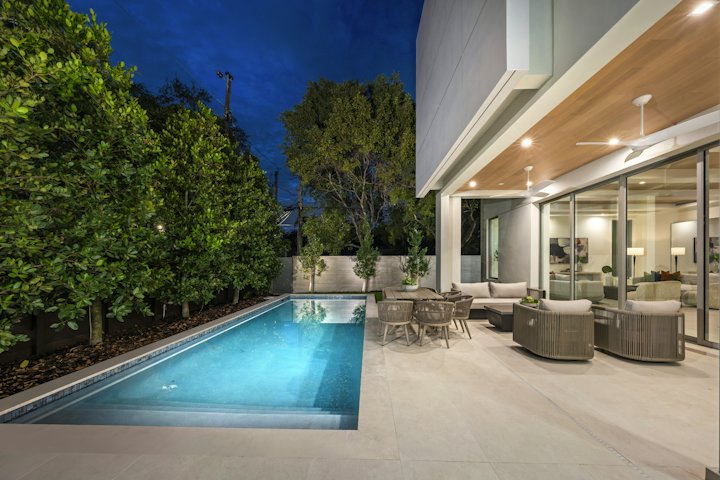
A general contractor license is needed to bid on, build, or superintend or manage the construction of any building, highway, public utility, grading, or other improvement or structure when the cost is $40,000 or more.34
More
Building permit offices must see proof of the license (or of an exemption) before issuing a permit for work of $40,000 or more.
How to get licensed
- 1
- 2
Name a qualifier: an owner, officer or W-2 employee who works for the business at least 20 hours a week (or most of its operating hours) and who will take the exam. One person can qualify at most two licenses.2
- 3
- 4
After the Board approves the application, schedule and pass the classification exam with a score of at least 70.2
- 5
Once licensed, put the license number on all contracts and bids, and pull permits and pass inspections for permitted work.2
What North Carolina requires
Experience
G.S. 87-10 lists these conditions before the exam: the applicant is at least 18, has good moral character, shows financial responsibility, pays the application fee, and consents to a criminal background check if the Board requires it.12
More
The statute and the Board rules checked do not set a number of years of work experience.
Exams 2
- S(Swimming Pools) classification exam
Each classification has its own exam, taken by the qualifier (the person who qualifies the license).12
More
For the S(Swimming Pools) classification the exam covers that classification. Under G.S. 87-10 the exam covers reading plans and specifications, the State Building Code, estimating, construction, ethics, contractor duties, North Carolina contractor and lien law, and the Sedimentation Pollution Control Act. A score of at least 70 passes. The Board may require a new application before a third attempt.
- North Carolina law, rules and building code exam (reciprocity)
Applicants by reciprocity must have passed the exam in their own state or the NASCLA exam, and must also pass the Board's North Carolina law, rule and building code exam.2
Bond None
No contractor bond is required by itself. An applicant may file a surety bond instead of showing the required working capital or net worth: $175,000 for a limited license, $500,000 for an intermediate license, and $1,000,000 for an unlimited license.2
More
The bond must be continuous, list the State of North Carolina as obligee, and come from a surety rated A- or better by A.M. Best.
Liability insurance
Not published by the agency. Customers and general contractors often ask for proof anyway.
Workers' compensation
North Carolina's Workers' Compensation Act covers private employers that regularly employ three or more people in the same business.4567
More
Covered employers must insure or be licensed to self-insure. A building permit for work of $40,000 or more requires proof of workers' compensation insurance as required by Chapter 97. A contractor who subcontracts work without getting a certificate of coverage from the subcontractor can be liable for the subcontractor's injured employees, even if the subcontractor has fewer than three employees.
Renewal
A license expires on January 1 after it is issued or renewed and becomes invalid 60 days later unless renewed.128
More
Renewals received on or after January 1 add a $10 late fee for each month or part of a month. Renewal needs proof of continued financial responsibility. A license that has been invalid for four years is archived and cannot be renewed; the holder must apply as a new applicant. The continuing education rule in G.S. 87-10.2 applies only to building, residential and unclassified licenses.
Fees
Good to know
Every license has a limitation based on the value of a single project (not counting land and land improvement costs).12
More
Limited: projects up to $750,000; needs working capital of at least $17,000 or net worth of at least $80,000. Intermediate: projects up to $1,500,000; needs working capital of at least $75,000 shown by an agreed-upon procedures report or an audited financial statement. Unlimited: no project limit; needs working capital of at least $150,000 shown the same way.
S(Swimming Pools) covers building, demolishing, servicing and repairing swimming pools, including excavation, concrete, gunite, fiberglass, liner and plastic pools, decks, walkways, tile and coping, and pumps, filters and chemical feeders.2
More
It does not include connections to sewer or water lines, grounding and bonding, or electrical connections.
Building, Residential and Public Utilities licenses also cover swimming pool work.2
The State Board of Examiners of Electrical Contractors issues a special restricted swimming pool license (SP-SP) for pool bonding work and installing light and audio forming shells, conduit and junction boxes, as part of a pool business.910
More
The annual fee is $100. Other pool electrical work needs a regular electrical contractor license.
The rule text checked names swimming pools only; it does not mention spas or hot tubs.2
Contracting without the required license is a Class 2 misdemeanor.11
Hiring a pool and spa contractor in North Carolina?
What to ask for
A current General Contractor license, Specialty classification S(Swimming Pools) number, then look it up yourself.
Common questions
Do I need a license to work as a pool and spa contractor in North Carolina?
Yes. North Carolina requires General Contractor license, Specialty classification S(Swimming Pools). A general contractor license is needed to bid on, build, or superintend or manage the construction of any building, highway, public utility, grading, or other improvement or structure when the cost is $40,000 or more. Building permit offices must see proof of the license (or of an exemption) before issuing a permit for work of $40,000 or more.
How much does General Contractor license, Specialty classification S(Swimming Pools) cost in North Carolina?
Application fee, limited license: $75. Application fee, intermediate license: $100. Application fee, unlimited license: $125. Annual renewal, limited license: $75. Annual renewal, intermediate license: $100. Annual renewal, unlimited license: $125. Late renewal, per month or part of a month after January 1: $10. Increase in limitation to intermediate: $100. Increase in limitation to unlimited: $125.
Is a bond required?
No contractor bond is required by itself. An applicant may file a surety bond instead of showing the required working capital or net worth: $175,000 for a limited license, $500,000 for an intermediate license, and $1,000,000 for an unlimited license. The bond must be continuous, list the State of North Carolina as obligee, and come from a surety rated A- or better by A.M. Best.
What exams do I need to pass?
S(Swimming Pools) classification exam. North Carolina law, rules and building code exam (reciprocity).
How often do I renew?
A license expires on January 1 after it is issued or renewed and becomes invalid 60 days later unless renewed. Renewals received on or after January 1 add a $10 late fee for each month or part of a month. Renewal needs proof of continued financial responsibility. A license that has been invalid for four years is archived and cannot be renewed; the holder must apply as a new applicant. The continuing education rule in G.S. 87-10.2 applies only to building, residential and unclassified licenses.
Sources
11 official pages, checked November 6, 2026
- § 87-10. Application for license; examination; certificate; renewal. · North Carolina General Assembly · checked November 6, 2026
- 21 NCAC 12 - Licensing Board for General Contractors (Chapter 12 rules) · NC Office of Administrative Hearings · checked November 6, 2026
- § 87-1. "General contractor" defined; exceptions. · North Carolina General Assembly · checked November 6, 2026
- § 87-14. Regulations as to issue of building permits. · North Carolina General Assembly · checked November 6, 2026
- § 97-2. Definitions. · North Carolina General Assembly · checked November 6, 2026
- § 97-93. Employers required to carry insurance or prove financial ability to pay for benefits; employers required to post notice; self-insured employers regulated by Commissioner of Insurance. · North Carolina General Assembly · checked November 6, 2026
- § 97-19. Liability of principal contractors; certificate that subcontractor has complied with law; right to recover compensation of those who would have been liable; order of liability. · North Carolina General Assembly · checked November 6, 2026
- § 87-10.2. Continuing education. · North Carolina General Assembly · checked November 6, 2026
- 21 NCAC 18 - Board of Examiners of Electrical Contractors (Chapter 18 rules) · NC Office of Administrative Hearings · checked November 6, 2026
- Licensing - NC State Board of Examiners of Electrical Contractors · NC State Board of Examiners of Electrical Contractors · checked November 6, 2026
- § 87-13. Unauthorized practice of contracting; impersonating contractor; false certificate; giving false evidence to Board; penalties. · North Carolina General Assembly · checked November 6, 2026
Rules change. Confirm with the agency before you bid or start work. How we research
Other trades in North Carolina
 General contractor
General Contractor license, Building classification (limited, intermediate or unlimited)
 Residential builder
General Contractor license, Residential classification (limited, intermediate or unlimited)
 Electrician
Electrical Contractor license (Limited, Intermediate or Unlimited; special restricted classes also available)
 Plumber
Plumbing Contractor license (Class I or Class II)
 HVAC contractor
Heating Contractor license (Heating Group 1, 2 or 3; Class I or Class II)
 Roofer
General Contractor license, Specialty classification S(Roofing)
 Handyman
Covered by the state contractor license above a threshold
 Landscaper
Landscape Contractor license
 Flooring contractor
General Contractor license, Specialty classification S(Interior Construction)
 Concrete contractor
General Contractor license, Specialty classification S(Concrete Construction)
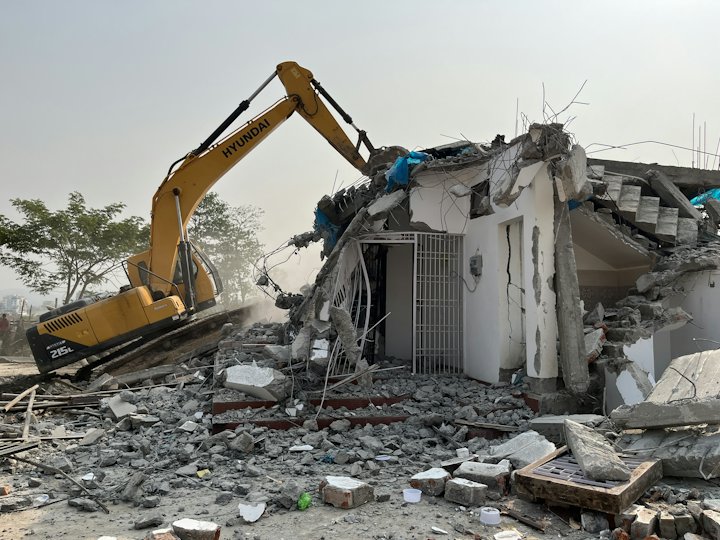 Demolition contractor
Covered by the state contractor license above a threshold
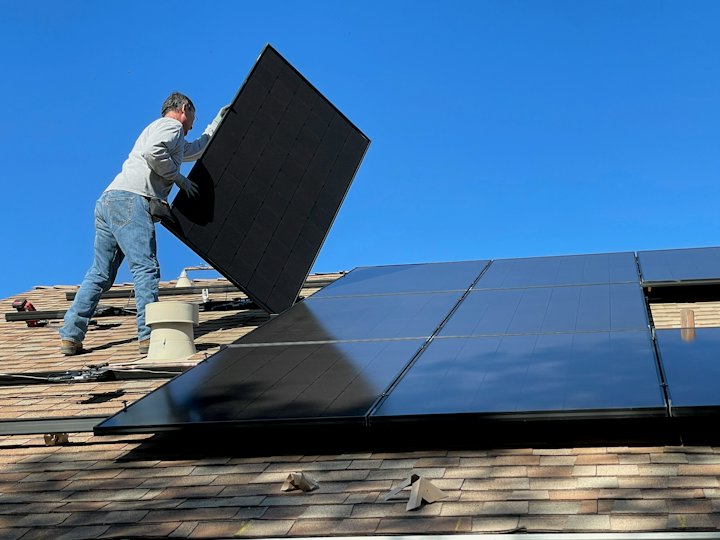 Solar installer
Covered by the state contractor license above a threshold
 Pest control
Structural Pest Control License (P, W or F phase)
 Home inspector
Home Inspector license
Pool and spa contractor licenses in other states
 Alabama
General Contractor license with Swimming Pools (SP) specialty
 Arizona
B-5 General Swimming Pool Contractor, A-9 Swimming Pools, or KA-5 Dual Swimming Pool Contractor
 Arkansas
Home Improvement license with the Swimming Pools, Spas specialty (residential, over $2,000); commercial license with the Swimming Pools, Spas specialty (commercial, $50,000 or more)
 California
C-53 Swimming Pool Contractor
 Connecticut
Swimming Pool Builder (SPB); SP-1 Limited Spa and Pool Contractor for maintenance and repair
 District of Columbia
Covered by the state contractor license above a threshold
 Florida
Certified Commercial Pool/Spa, Residential Pool/Spa, or Swimming Pool/Spa Servicing Contractor (CP); registered version RP
 Hawaii
C-49 Swimming Pool Contractor
 Idaho
Idaho contractor registration
 Iowa
Construction contractor registration
 Kentucky
No state license for this work
 Louisiana
Residential Swimming Pools specialty; Swimming Pools subclassification (commercial)
 Maryland
Covered by the state contractor license above a threshold
 Massachusetts
Home Improvement Contractor (HIC) registration (in-ground pools)
 Michigan
Residential Maintenance and Alteration Contractor License – Swimming Pool Installation
 Minnesota
Construction contractor registration
 Mississippi
Swimming Pools specialty classification (commercial certificate of responsibility)
 Nebraska
Contractor registration (Nebraska Department of Labor)
 Nevada
A-10 Commercial and Residential Pools (A-10a to A-10f)
 New Jersey
Home Improvement Contractor Business Registration
 New Mexico
GS-25 Swimming Pools (non-plumbing, mechanical or electrical)
 New York
No state license. Cities or counties may license it
 North Dakota
Covered by the state contractor license above a threshold
 Pennsylvania
Home Improvement Contractor Registration (HICPA)
 Rhode Island
Contractor Registration
 South Carolina
General Contractor license, Swimming Pools subclassification (Contractor's Licensing Board)
 Tennessee
Contractor license with BC-26 Swimming Pools classification
 Utah
Covered by the state contractor license above a threshold
 Virginia
Class A, B or C contractor license with the Swimming Pool Construction (POL) specialty
 Washington
Specialty contractor registration (Swimming pools, spas and hot tubs, code RB)
 West Virginia
General Engineering Contractor (public pools); West Virginia contractor license for other pool work