Residential builder · Tennessee
Tennessee residential builder license requirements
What Tennessee requires before you take paid building and remodeling homes: the license, job size limit, exams, fees, bond and insurance. Checked November 6, 2026 from 10 official sources.
Do I need a license to work as a residential builder in Tennessee?
Yes. You need a state license: Contractor license with BC-A Residential classification (or BC-A/r Restricted Residential).
Issued by Tennessee Board for Licensing Contractors, Department of Commerce and Insurance1
- Needed from
- $25,000
- Bond
- None listed
- Initial application
- $250
- Exams
- 3
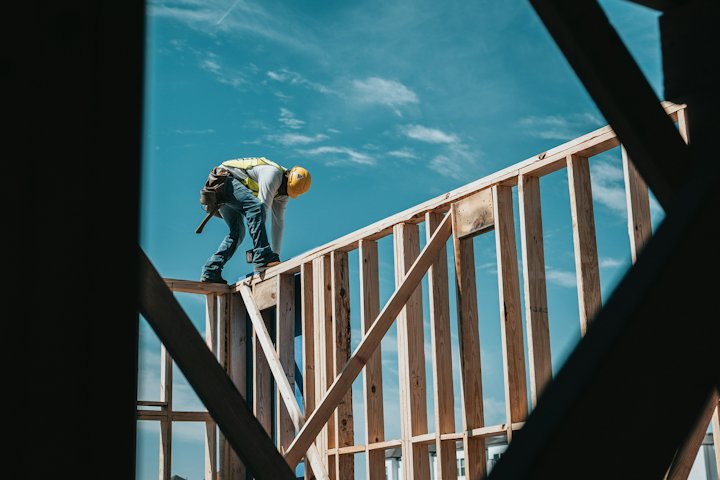
A contractor license is needed before bidding, offering or negotiating a price on a project of $25,000 or more as a prime contractor (contracting directly with the owner), as a construction manager or consultant, or as a subcontractor doing electrical, mechanical, plumbing, HVAC or roofing work when that portion is $25,000 or more.23
More
Masonry subcontractors need a license when the masonry portion is $100,000 or more.
How to get licensed
- 1
- 2
Get a CPA-reviewed financial statement (audited if the limit is above $3,000,000), less than 12 months old, in the exact name to be licensed.2
More
Or file the board's surety bond for at least 50% of the limit instead.
- 3
Gather a letter of reference, a certificate of general liability insurance, proof of workers' compensation or exemption, and a notarized Contractor's Affidavit signed by the qualifying agent and owners.2
- 4
Corporations, LLCs and limited partnerships must be registered with the Tennessee Secretary of State.2
- 5
- 6
Get a local business tax license for each city or county where you will work.2
What Tennessee requires
Experience
The application must show construction experience: an experience sheet and a letter of reference from a past client, employer or code official who inspected the work (not a family member).245
More
Monetary limits are granted based on finances plus experience on jobs of that size. The board's pages do not state a minimum number of years.
Exams 3
- Business and Law
Every new contractor applicant must pass the Tennessee Business and Law exam.267
More
Since July 1, 2026, the board's exam vendor is Prov (it was PSI before). The exam is open-book and based on the NASCLA Tennessee reference manual. Exam results are typically valid with the board for two years. Up to two people may take each exam for a company, and the person who passes it (the qualifying agent) must be an owner, officer or full-time employee.
- Residential trade exam (BC-A)
- BC-A/r limited license course
For the BC-A/r restricted residential license, the applicant takes a limited license course at a Tennessee community college or vocational school.27
More
The board's contractor page says the course replaces both the BC-A trade exam and the Business and Law exam, while its classification outline says it replaces the residential trade exam.
Liability insurance
Workers' compensation
Workers' compensation insurance is required unless the applicant shows proof of an exemption.249
More
Owners, officers, partners and LLC members may register as a Construction Services Provider on the Secretary of State's workers' compensation exemption registry to exempt themselves. A sole proprietor or partnership with no employees or subcontractors that works directly for a residential property owner may claim an exemption on the application questionnaire (the handyman exemption).
Renewal
A contractor license is issued for two years. Renewal needs a $200 fee, proof of general liability insurance, workers' compensation proof or exemption, Secretary of State proof for corporations and LLCs, and a financial statement: a CPA-compiled statement if the limit is above $1.5 million, or a self-prepared balance sheet if it is below $1.5 million.345
More
BC-A and BC-A/r residential contractors must also complete eight hours of continuing education each renewal. There is a 12-month grace period with a $20 per month late fee. After 12 months expired, the contractor must apply again as a new applicant.
Fees
Good to know
BC-A covers one- to four-family homes up to three stories and their accessory buildings.7
BC-A/r is a restricted single-family residential license with a monetary limit of no more than $125,000, based on a financial statement.27
More
The limit includes the contractor's land cost and profit. There is no 10% tolerance and no joint ventures. To go above $125,000 or add classifications, the contractor must pass the exams and submit a reviewed financial statement.
BC-A and BC-A/r contractors must complete eight hours of continuing education with every renewal and upload the certificate in CORE.4
Each license has a monetary limit for each single project. The limit is 10 times the lesser of working capital or net worth, plus the needed experience.2
More
For example, a $150,000 limit needs $15,000 in both. An unlimited limit needs $300,000 in both. There is a 10% bid tolerance, except on the BC-A/r license. Projects may not be split into phases to stay under the limit.
A reviewed financial statement is required for limits of $3,000,000 or less and an audited statement for limits above $3,000,000.2
More
It must be prepared by a licensed CPA or LPA, follow GAAP, and be less than 12 months old. Working capital can be supplemented with a line of credit, or the statement can be backed by a guaranty agreement. A bond of $500,000 (or $1,000,000 for unlimited) on the board's form may replace a guaranty agreement.
In Bradley, Davidson, Hamilton, Haywood, Knox, Marion, Robertson, Rutherford and Shelby counties, a state Home Improvement license is needed for residential remodeling jobs from $3,000 to $24,999.310
More
The board says home improvement includes repair, replacement, remodeling, alterations or additions to land or a residential building, such as driveways, pools, porches, garages, landscaping, fences, roofing and painting.
Residential builder rules in Tennessee cities
Some places make residential builders get a local license on top of Tennessee's. Find yours below.
- ArlingtonLocal license required
- AthensNo local license for this trade
- BartlettNo local license for this trade
- BrentwoodNo local license for this trade
- ChattanoogaNo local license for this trade
- ClarksvilleLocal license required
- ClevelandNo local license for this trade
- CollegedaleNo local license for this trade
- CookevilleNo local license for this trade
- FarragutNo local license for this trade
- GallatinLocal license required
- GatlinburgLocal license required
- HendersonvilleLocal license required
- JacksonNo local license for this trade
- Johnson CityLocal license required
- KingsportLocal license required
- LakelandLocal license required
- LebanonNo local license for this trade
- MemphisLocal license required
- MillingtonLocal license required
- MorristownLocal license required
- NashvilleNo local license for this trade
- Oak RidgeLocal license required
- SmyrnaNo local license for this trade
No match. Your city may not be on the site yet. Check with its building department.
Hiring a residential builder in Tennessee?
What to ask for
A current Contractor license with BC-A Residential classification (or BC-A/r Restricted Residential) number, then look it up yourself.
Common questions
Do I need a license to work as a residential builder in Tennessee?
Yes. Tennessee requires Contractor license with BC-A Residential classification (or BC-A/r Restricted Residential). A contractor license is needed before bidding, offering or negotiating a price on a project of $25,000 or more as a prime contractor (contracting directly with the owner), as a construction manager or consultant, or as a subcontractor doing electrical, mechanical, plumbing, HVAC or roofing work when that portion is $25,000 or more. Masonry subcontractors need a license when the masonry portion is $100,000 or more.
How much does Contractor license with BC-A Residential classification (or BC-A/r Restricted Residential) cost in Tennessee?
Initial application (also reinstatement or ownership change): $250. Renewal: $200. Late renewal penalty, per month (up to 12 months): $20. Mode of operation change: $100. Retirement, per year (up to 7 years): $25. Duplicate license: $25.
Is a bond required?
A contractor license does not require a license bond. Since July 1, 2026, a contractor may file a surety bond on the board's form instead of a CPA-reviewed or CPA-audited financial statement. That bond must be at least 50% of the monetary limit requested.
What exams do I need to pass?
Business and Law. Residential trade exam (BC-A). BC-A/r limited license course.
How often do I renew?
A contractor license is issued for two years. Renewal needs a $200 fee, proof of general liability insurance, workers' compensation proof or exemption, Secretary of State proof for corporations and LLCs, and a financial statement: a CPA-compiled statement if the limit is above $1.5 million, or a self-prepared balance sheet if it is below $1.5 million. BC-A and BC-A/r residential contractors must also complete eight hours of continuing education each renewal. There is a 12-month grace period with a $20 per month late fee. After 12 months expired, the contractor must apply again as a new applicant.
Sources
10 official pages, checked November 6, 2026
- TN Board for Licensing Contractors · Tennessee Department of Commerce and Insurance, Board for Licensing Contractors · checked November 6, 2026
- Contractor (How to Get a License) · Tennessee Department of Commerce and Insurance, Board for Licensing Contractors · checked November 6, 2026
- Bidding and Contractor License Requirements (board webinar slides, 2026) · Tennessee Department of Commerce and Insurance, Board for Licensing Contractors · checked November 6, 2026
- Renewal, Reinstatement, & Other Resources · Tennessee Department of Commerce and Insurance, Board for Licensing Contractors · checked November 6, 2026
- Contractor Initial Application Package · Tennessee Department of Commerce and Insurance, Board for Licensing Contractors · checked November 6, 2026
- Exam Information · Tennessee Department of Commerce and Insurance, Board for Licensing Contractors · checked November 6, 2026
- Tennessee Contractor Classification Outline · Tennessee Department of Commerce and Insurance, Board for Licensing Contractors · checked November 6, 2026
- Fees · Tennessee Department of Commerce and Insurance, Board for Licensing Contractors · checked November 6, 2026
- Insurance Resource Information for Licensees (Rev. 3/2011) · Tennessee Department of Commerce and Insurance, Board for Licensing Contractors · checked November 6, 2026
- Home Improvement Contractor (How to Get a License) · Tennessee Department of Commerce and Insurance, Board for Licensing Contractors · checked November 6, 2026
Rules change. Confirm with the agency before you bid or start work. How we research
Other trades in Tennessee
 General contractor
Contractor license (BC Building Construction, BC-B Commercial, BC-C Industrial, or other classification)
 Electrician
Contractor license with CE Electrical classification ($25,000 and up); Limited Licensed Electrician (LLE) (under $25,000)
 Plumber
Contractor license with CMC-A Plumbing classification ($25,000 and up); Limited Licensed Plumber (LLP) (under $25,000)
 HVAC contractor
Contractor license with CMC-C HVAC, Refrigeration and Gas Piping classification
 Roofer
Contractor license with BC-21 Roofing classification
 Painter
Contractor license with BC-11 Painting and Interior Decorating classification
 Handyman
Covered by the state contractor license above a threshold
 Landscaper
Contractor license with BC-29 Landscaping classification
 Flooring contractor
Contractor license with BC-4 Floor Covering classification
 Concrete contractor
Contractor license with BC-19 Concrete classification
 Demolition contractor
Contractor license with BC-31 Demolition classification
 Pool and spa contractor
Contractor license with BC-26 Swimming Pools classification
 Solar installer
Contractor license with S-Solar Panel Installation specialty classification
 Fence contractor
Contractor license with BC-30 Fencing classification
 Tree service
Contractor license with S-Tree Trimming specialty classification
 Pest control
 charter (business) and pest control operator license by category, such as General Pest and Rodent Control (GRC) or Wood Destroying Organisms (WDO)
 Home inspector
Home Inspector License
Residential builder licenses in other states
 Alabama
Residential Home Builders License (unlimited, limited, or roofers)
 Alaska
General contractor registration with residential contractor endorsement
 Arizona
B General Residential Contractor
 Arkansas
Residential Builder license, Arkansas Residential Contractors Committee
 California
B General Building Contractor or B-2 Residential Remodeling Contractor
 Connecticut
New Home Construction Contractor Registration
 Delaware
Contractor Business License (resident or non-resident), Division of Revenue
 District of Columbia
Covered by the state contractor license above a threshold
 Florida
Certified Residential Contractor (CR) or Registered Residential Contractor (RR); Certified Building Contractor (CB) also covers residential work
 Georgia
Residential Contractor license, Residential-Basic or Residential-Light Commercial
 Hawaii
B General Building Contractor
 Idaho
Idaho contractor registration
 Illinois
No state license for this work
 Indiana
No state license for this work
 Iowa
Construction contractor registration
 Kansas
No state license. Cities or counties may license it
 Kentucky
No state license. Cities or counties may license it
 Louisiana
Residential license, Residential Construction classification
 Maryland
Home Builder Registration (Maryland Home Builder Registration Act)
 Massachusetts
Construction Supervisor License (Restricted, one- and two-family dwellings)
 Michigan
Residential Builder License
 Minnesota
Residential Building Contractor (BC) or Residential Remodeler (CR) license
 Mississippi
Residential Builder license (also Residential Remodeler, Residential Roofer and Residential Construction Manager)
 Missouri
No state license. Cities or counties may license it
 Montana
 Construction Contractor License
 Nebraska
Contractor registration (Nebraska Department of Labor)
 Nevada
B-2 Residential and Small Commercial (B-7 Residential Remodeling for remodels only)
 New Jersey
New Home Builder Registration (New Home Warranty Program)
 New Mexico
GB-2 Residential
 North Carolina
General Contractor license, Residential classification (limited, intermediate or unlimited)
 North Dakota
Contractor License (Class A, B, C or D)
 Ohio
No state license. Cities or counties may license it
 Oregon
CCB contractor license with a Residential General Contractor endorsement
 Pennsylvania
No state license for this work
 Rhode Island
Contractor Registration (a residential construction license is required from January 1, 2028)
 South Carolina
Residential Builder license
 South Dakota
Contractor's Excise Tax License (Department of Revenue)
 Texas
No state license for this work
 Utah
R100 Residential and Small Commercial Contractor
 Vermont
Residential Contractor Registration (individual or business)
 Virginia
Class A, B or C contractor license with the Residential Building (RBC) classification
 Washington
General contractor registration (no separate residential license)
 West Virginia
Residential Contractor
 Wisconsin
Dwelling Contractor certification with a Dwelling Contractor Qualifier